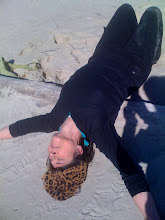
First and foremost, because I feel better when I practice yoga.
Anxiety, depression and bipolar spectrum disorder are common afflictions in my family of origin. As I raise my children, I am treated to the pleasure watching these struggles arise in the next generation. And as I have watched my children, I learn more about myself.
I have structured my life to support my mental health. Through the years, I have learned that to maintain good mental health, I must also maintain good physical health. The body and the mind are not separate entities, but a single functional unit. I have learned that vibrant health is the basis for a vibrant and happy life.
Yoga is the best medicine and most efficient path to vibrant health. I move, stretch, and strengthen my body through its full range of possibility. I exercise with as much presence as I can muster, and I follow the practice with meditation and stillness. I challenge myself toward practices that seem unattainable and marvel when I master something new. My anxieties are lessened and I am able to face my struggles with poise. I am able to do things that seem impossible when I am not practicing yoga.
I saw a yoga student at a social event yesterday. We talked about these issues and how yoga made us feel. She said, "when I do my 30 minute yoga practice every morning, I just feel better." That's it. We feel better. We rise to our days with grace and joy.
Yoga is a daily tune up for the self. It keeps our spirits and our bodies running at their highest potential. It feels good to take this medicine. It is a pleasurable cure for what ails us.
Come along, give it a try. If you want to experience true change in yourself, practice regularly. Take a couple classes each week and work toward a daily practice of your own. Half an hour a day will make profound differences in how you feel for the other twenty three and a half hours of your day.
Showing posts with label gentle yoga. Show all posts
Showing posts with label gentle yoga. Show all posts
6/14/10
4/20/10
yoga desk posture
you're probably sitting in a chair right now.
stop and look at your shape:
Here's to a happy and healthy body! Cheers!
stop and look at your shape:
- are you slumped into the back of the chair?
- are your shoulder rounded toward your ears?
- is your belly loose and collapsed?
- is your upper chest concave?
- is your head forward of your chest?
- are your knees or ankles crossed?
- draw yourself forward so you are not leaning into the chair back;
- place the soles of both feet on the ground, steady, parallel, and comfortable;
- rock your pelvis back and forth and side to side to soften the hip sockets;
- find a central alignment for your pelvis, neither hollowed in the belly nor the low back, but balanced, your pubic bone and tail bone feel almost level;
- lift your pelvic floor (the trampoline beneath your digestive and reproductive organs);
- lift your lower belly;
- interlace your fingers and place your palms on your upper chest;
- float your heart toward your hands and breath into your palms;
- turn your palms away and stretch your arms out in front of you, move your shoulder blades forward and back a dozen times or so, and then gently hold the shoulder blades loose and low on your back;
- bring your palms and your interlaced fingers behind your head;
- rest your head back into your palms like you resting your head on a pillow;
- stretch your elbows wide while you gently lift the back of your head, lengthening your upper neck;
- release your hands and arms;
- let your upper arms dangle from your shoulder blades;
- bend your elbows to rest your hands on your thighs or the desk in front of you;
- close your eyes and tune into how your body feels right now.
Here's to a happy and healthy body! Cheers!


4/19/10
be a puddle: savasana
lie on the floor
feel the back of your body on the floor
notice all the places where you touch the floor
soften into those places
let your weight fall into the earth, like sand melting through an hourglass
release deeply
release so deeply that your tissues seem to melt
and your bones fall to the back of your body
your abdomen begins to feel like a mountain lake
deep, clear, and dark
your breath blows gently across the surface of the lake
and you see the reflection of the sky, the stars, and all that is
you are a reflection of all that is
feel the back of your body on the floor
notice all the places where you touch the floor
soften into those places
let your weight fall into the earth, like sand melting through an hourglass
release deeply
release so deeply that your tissues seem to melt
and your bones fall to the back of your body
your abdomen begins to feel like a mountain lake
deep, clear, and dark
your breath blows gently across the surface of the lake
and you see the reflection of the sky, the stars, and all that is
you are a reflection of all that is
6/3/08
Yoga for Grief: Backbends


Dear Yogini: What are supportive postures for grief and broken hearts? from: A Grieving Soul
Dear Beautiful Shimmering Grieving Soul:
When we open our hearts to life our hearts inevitably will be broken by life. Our hearts will be broken for lost love, for friends and loved ones who die, for children who grow up and leave home, for flowers that wilt, for cultures, places and critters lost from the planet, for the violence perpetrated by one human on another, and for the hope that lives on in spite of loss. Life is wrought with heartbreak. We keep opening our hearts so that we can experience love and joy knowing that everything passes in time.
Heart opening postures support the body through the process of grief. They help us feel safe when we are exposed. They let us know that we can care for ourselves in vulnerable situations. When we practice heart openers we experience the physical sensation of an open heart without breaking. Difficult emotions may arise in these postures. Breathe through the emotions. Let them in and don't grasp onto them. Always breathe and let them pass through you.
Backbends can be done standing, seated or lying on the floor. There are belly down and belly up variations. Begin simply. Try sprinkling the seated and standing variations pictured above throughout your day. Invite your heart to lead and your gaze to turn gently up. These poses will counter the habitual forward bending we do in our lives. You'll feel better at the end of your days as a result.

Bridge pose is a larger heart opener that is accessible to most bodies. It is contraindicated for those with neck injuries. Seek help from a qualified teacher if this pose causes you any neck pain.
To begin: Lie on your back on the floor with your arms along side you, your knees bent and your feet parallel. Notice the presence or absence of a lumbar curve, the space between your low back and the floor. Beginners may choose to practice low bridge and pelvic tilting: alternately press your low back into the floor with your exhale and let the low back rise with your inhale. Keep your sitting bones on the floor for this variation. The core all back bends is the arching of the spine towards the front of the body and the lifting of the heart into the front of the awareness.
After practicing pelvic tilts find 'low bridge:' the position where your buttocks and shoulders remain on the floor while the back is arched toward the ceiling. Engage your abdominal and back muscles here to support your lumbar spine as you press your feet into the floor and lift your pelvis upward into bridge posture. Continue to open the front of your spine, lift your heart toward the front of your body and maintain strength and support in your pelvic floor and abdominal muscles. You can work with the arms alongside you or clasp your hands together on the floor under your pelvis. In either case press the arms bones firmly into the floor for additional support. Hold the pose for three to five long smooth breaths. You'll want to repeat the posture about three times.
There are two common ways to come down from bridge posture. You may reengage your supporting muscles and lower your back to the floor while you maintain the arch of the low back thus bringing the sitting bones to the floor before the low back. This method improves low back and abdominal strength. Alternately, you may slowly drop one vertebrae at a time to the floor from your upper back to your tail bone. This method improves spinal articulation and mobility. Both are good.

For times of deeper grief or when you need restorative rest choose a supported variation of bridge posture. Lie face up on the floor with knees bent and place yoga blocks, folded blankets or a firm pillow under your pelvis. The basic form of the pose is the same and you can release the work of the pose and relax into gravity. If it is comfortable on your shoulders you can let your arms rest in 'cactus' alongside the head and place an eye bag on your eyes and forehead. Remain in supported bridge for five to ten minutes or as long as your low back is comfortable.
The goal of heart openers is not to avoid grief. Rather, to be present for grief, to accept grief, and to weep. Then to wipe your tears away, stand up and embrace life knowing that the more deeply we fall in love the more opportunities we will have to grieve. And the more fully we grieve our losses the more deeply we can fall in love.
5/4/08
Yoga for Special Conditions
Dear Yogini: I have two medical conditions, Arnold Chiari Syndrome, and the associated Syringomyelia. What these have caused is a loss of sensory input from my peripheral nerves (can't feel much in my hands and feet) which affects my balance. And more importantly, syringomyelia has caused extreme scoliosis. I stand tilted extremely to the right from the waist up and walk slouched to the front and right. The crooked, unbalanced gait is causing damage to my left hip joint. I've tried yoga (with you, actually), but the poor balance and posture made it seem futile from the start.
Is there a level of yoga practice which can give me the benefit of limbered joints, better muscle tone, improved balance, decreased pain levels, etc.? I guess part of it is my "look good". Trying to practice in a room full of lithe young bodies makes me feel older and more physically broken than before I came to class!
Dear Friend:
I hadn’t heard of Arnold Chiari Syndrome before your letter. I did a little research and it piqued both my curiosity and my empathy. While my condition is nowhere as severe as yours, you might want to know that I too suffer from peripheral neuropathy related to spondylolisthesis. Yoga has been the best medicine ever. All of the side effects are good. Yoga keeps me active and happy in my body.
I believe that Yoga can give you the benefits that you seek: limbered joints, better muscle tone, improved balance and decreased pain. And you are correct, yoga won’t transform you into one of the lithe young bodies on the cover of yoga journal. That isn’t your path. Yoga can make experiencing life in the body you have a more pleasant journey. (See the next post for some research on the impact of yoga for improved balance, height and strength in seniors.)
It is important that you find a class and a teacher who resonate for you. You will want to look for gentle yoga, therapeutic yoga, or perhaps a class for seniors. In an appropriate yoga class the teacher will give modifications of the yoga poses and use props to make the yoga poses accessible to you and others. If you find the right class you’ll meet others who are also working with and through physical limitations. Having a sense of belonging helps all of us be motivated to practice regularly. Try different classes and different teachers until you find the class that fits your body, your temperament, and your life.
One of my favorite books of the last year is Waking, by Matthew Sanford. Matthew is a paraplegic and a yoga teacher. He describes how yoga reawakened awareness in his body after many years of disconnection. His sensation has not returned. His mobility has not returned. But his sense of prana, of life force, in his immobile body has returned. He is happier and at ease in the body that he does have. Each of us can find this. We can tap and sense our pranic bodies (prana maya kosha) and have live healthier from this awareness. Sensing the prana maya kosha may even be easier as we age and the rush of sensation accompanying youth dissipates. We can become aware of the slower and deeper rhythms of our bodies. We can find peace and joy in the body we have, in this moment.
Is there a level of yoga practice which can give me the benefit of limbered joints, better muscle tone, improved balance, decreased pain levels, etc.? I guess part of it is my "look good". Trying to practice in a room full of lithe young bodies makes me feel older and more physically broken than before I came to class!
Dear Friend:
I hadn’t heard of Arnold Chiari Syndrome before your letter. I did a little research and it piqued both my curiosity and my empathy. While my condition is nowhere as severe as yours, you might want to know that I too suffer from peripheral neuropathy related to spondylolisthesis. Yoga has been the best medicine ever. All of the side effects are good. Yoga keeps me active and happy in my body.
I believe that Yoga can give you the benefits that you seek: limbered joints, better muscle tone, improved balance and decreased pain. And you are correct, yoga won’t transform you into one of the lithe young bodies on the cover of yoga journal. That isn’t your path. Yoga can make experiencing life in the body you have a more pleasant journey. (See the next post for some research on the impact of yoga for improved balance, height and strength in seniors.)
It is important that you find a class and a teacher who resonate for you. You will want to look for gentle yoga, therapeutic yoga, or perhaps a class for seniors. In an appropriate yoga class the teacher will give modifications of the yoga poses and use props to make the yoga poses accessible to you and others. If you find the right class you’ll meet others who are also working with and through physical limitations. Having a sense of belonging helps all of us be motivated to practice regularly. Try different classes and different teachers until you find the class that fits your body, your temperament, and your life.
One of my favorite books of the last year is Waking, by Matthew Sanford. Matthew is a paraplegic and a yoga teacher. He describes how yoga reawakened awareness in his body after many years of disconnection. His sensation has not returned. His mobility has not returned. But his sense of prana, of life force, in his immobile body has returned. He is happier and at ease in the body that he does have. Each of us can find this. We can tap and sense our pranic bodies (prana maya kosha) and have live healthier from this awareness. Sensing the prana maya kosha may even be easier as we age and the rush of sensation accompanying youth dissipates. We can become aware of the slower and deeper rhythms of our bodies. We can find peace and joy in the body we have, in this moment.
Subscribe to:
Posts (Atom)